Did you know that you don’t have to be a qualified electrician in order to carry out PAT testing?
As long as you’re competent to do so, absolutely anyone can check electrical appliances for safety. The most commonly accepted way to be seen as competent is to take a PAT training course and be presented with a Certificate of Competency in PAT testing.
What is PAT Testing?
Portable Appliance Testing, also known as PAT testing, is the examination of portable electrical equipment and appliances to ensure they are safe to use. It generally includes three steps;
Regular, informal checks by the electrical equipment’s user(s)
A formal visual inspection of the equipment
A manual examination of the equipment with a portable appliance tester device (the PAT test)
Any portable electrical appliance (anything with a lead and a plug) needs to be PAT tested. Some examples include laptops and computers, kettles, handheld drills, printers, microwaves etc.
Is PAT testing a legal requirement?
PAT testing is not a legal requirement. The law does state that any electrical equipment in the workplace must be maintained to ensure it is safe and doesn’t pose any risk to the people using it. It doesn’t, however, specify how the equipment should be maintained, or how often.
Generally, PAT testing involves three steps, user checks, a visual inspection and the manual PAT test using a portable appliance tester.
User checks
All users should be trained on how to use the equipment safely. This includes understanding the risks associated with the equipment and how to look out for signs of danger. Every individual should be able to visually check the appliance for any signs of damage and understand whether or not it is safe for use. They should also be able to highlight potential hazards such as trapped cables or water hazards.
Visual inspection
A formal visual inspection should be carried out by a competent member of staff or a professional (an electrical engineer). The HSE says that this process normally flags up 90% of issues with electrical equipment. The equipment should be switched off and unplugged before carrying out this stage of the inspection.
Check the plug for any signs of damage. This includes cracks, burns, or bent pins. When checking the wiring, you should ensure that the live, neutral and earth wires are all tightly connected.
Check the cable for any signs of damage. This could be cuts or fraying. Any exposed wiring is a fail.
Check the appliance itself for damages. This includes cracks, burns, corrosion or other signs of wear and tear.
Check the mains socket for damages. This doesn’t relate to the appliance itself, but it’s worth checking for cracks, signs of overheating and any loose fittings on the plug socket.
Residual current device (RCD) checks. The RCD’s test button will trip if the current flowing through the live conductor is different to that in the neutral.
Manual Examination
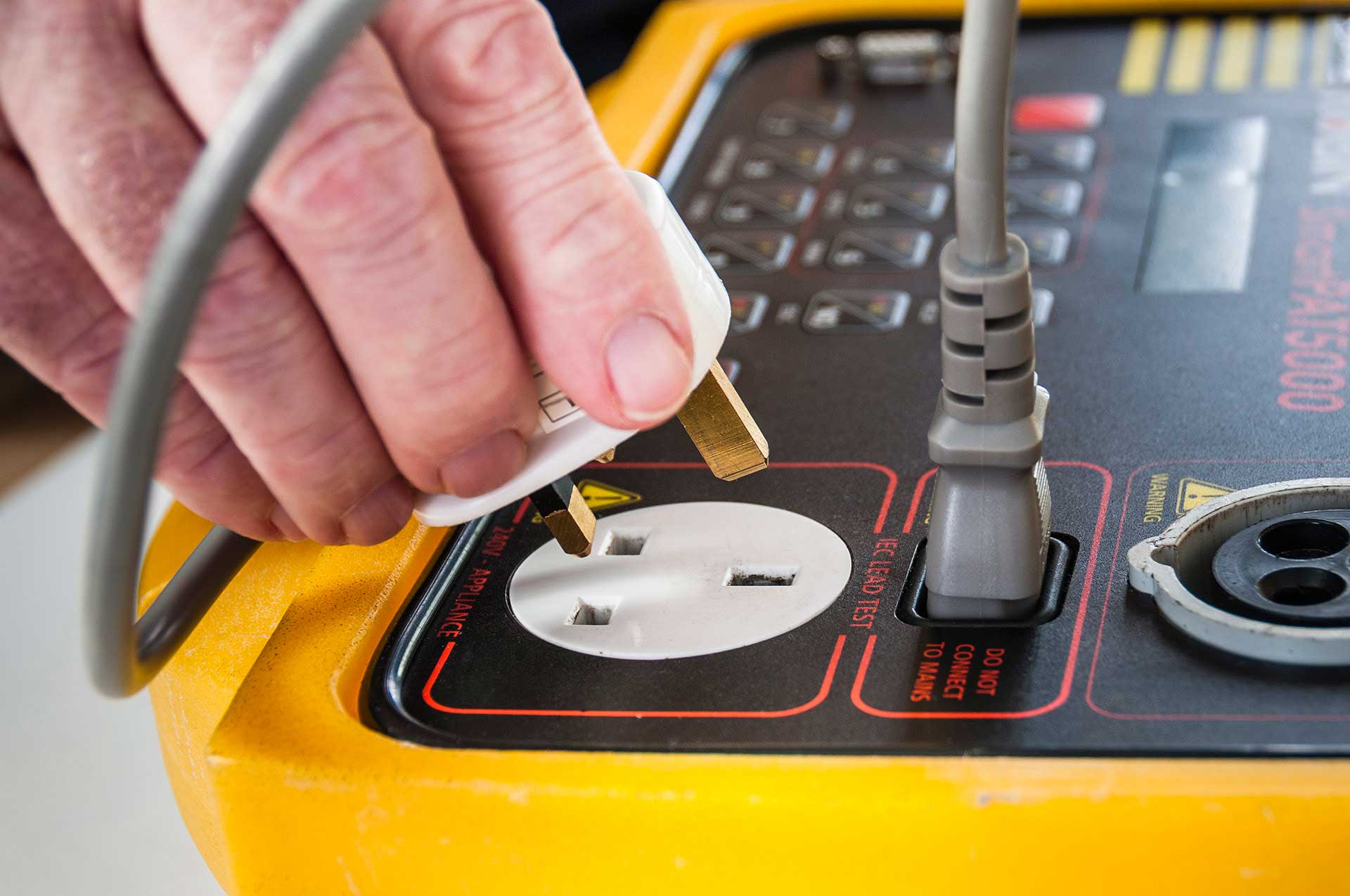
Once the visual inspection is complete, it’s time for the manual examination. This is the stage of the Electrical PAT Testing where the portable appliance tester device is introduced. This device will test the appliance for earth continuity, lead polarity and insulation resistance.
Depending on the results, the appliance will receive a pass or fail sticker. Failed appliances should not be used, and should be removed for disposal or repair. Once repaired, it must pass an additional PAT test to be considered safe for use.
Who can carry out a PAT test?
Electrical PAT testing can be carried out by any competent person with the relevant training and equipment. This will likely be a qualified electrician. Interested in learning how to perform PAT testing and other electrical procedures? You might want to consider completing an electrical course.Get in touch with The Skills Centre to learn more about becoming an electrical engineer, or read more about our courses on our website!
Gas Engineer Apprenticeship vs Course: Which Route to Choose
Choosing between a gas engineer apprenticeship and a course-based training programme represents one of the most important decisions for anyone entering the gas engineering profession. Both routes lead to Gas Safe registration and rewarding careers, but they differ significantly in structure, cost, time commitment and learning approach.
Apprenticeship Benefits and Structure
A gas engineer apprenticeship combines practical work experience with formal learning, typically lasting between 18 months and four years. Apprentices work for an employer whilst studying part-time at a training centre or college.
The apprenticeship structure includes on-the-job training under experienced gas engineers, regular assessment of practical skills, and theoretical learning covering gas safety regulations, installation procedures and maintenance techniques. Apprentices gain real-world experience from day one, working on actual installations and repairs whilst building their knowledge base.
Employers provide mentorship throughout the apprenticeship, ensuring apprentices develop both technical competence and professional standards. This hands-on approach means apprentices encounter diverse scenarios and equipment types, preparing them thoroughly for independent work.
Most gas engineer apprenticeships follow nationally recognised frameworks, ensuring consistent training standards across different employers and regions. Apprentices typically progress through different levels of responsibility as their skills develop.
Course-Based Training Advantages
Intensive gas engineer courses offer a faster route to qualification, typically completed within weeks or months rather than years. These programmes focus entirely on essential knowledge and practical skills needed for Gas Safe registration.
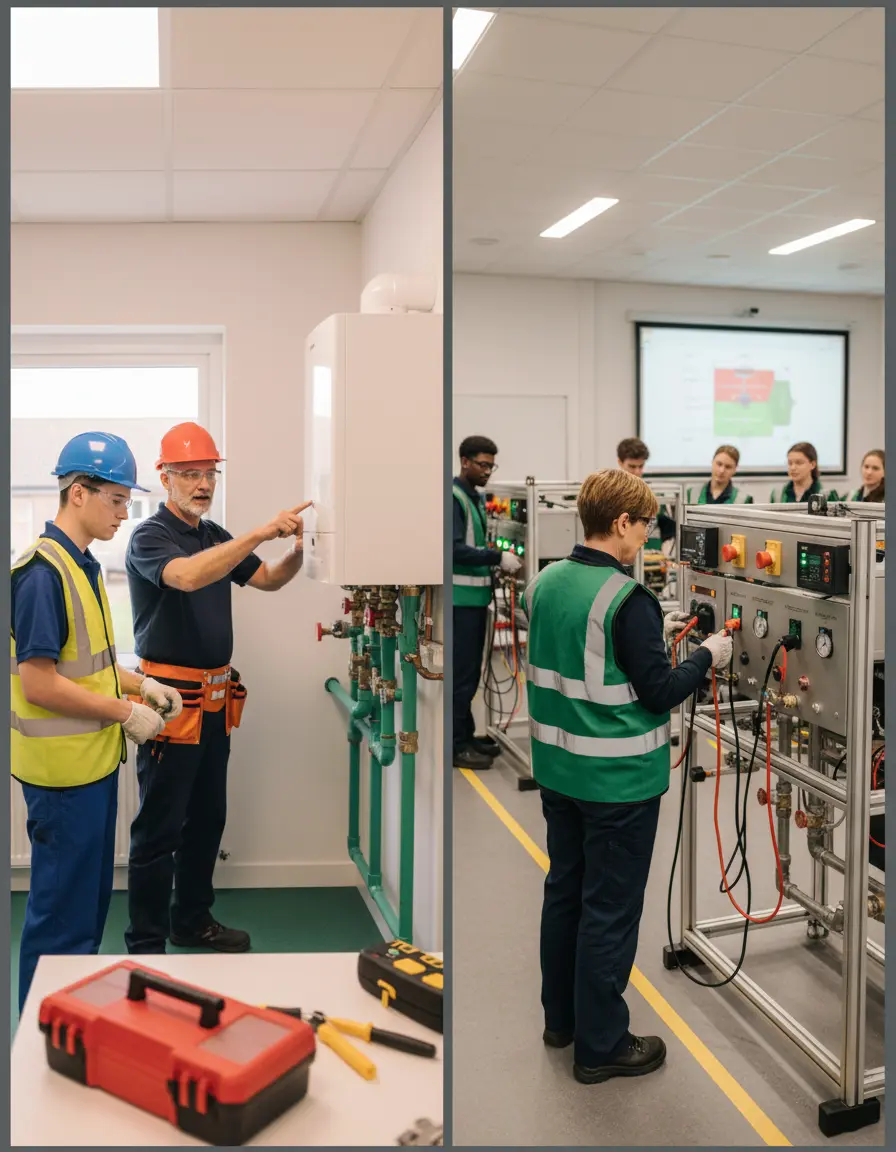
Course participants benefit from concentrated learning in purpose-built training facilities with modern equipment and experienced instructors. The structured environment allows for focused skill development without workplace distractions.
Flexibility represents a key advantage of course-based training. Many providers offer full-time, part-time and evening options to accommodate different circumstances. This flexibility particularly benefits career changers who cannot commit to long-term apprenticeships.
Course graduates can often start earning as qualified gas engineers much sooner than apprentices, potentially offsetting the initial training investment more quickly. The intensive nature of courses also means participants retain focused attention on gas engineering principles without dilution from other workplace responsibilities.
Age and Eligibility Considerations
Apprenticeships traditionally target younger people, though many programmes now accept applicants of all ages. Some employers prefer younger apprentices for longer-term investment, whilst others value the maturity and work ethic of older candidates.
Most apprenticeship programmes require basic maths and English qualifications, typically GCSE grade C/4 or equivalent. Some employers provide additional support for candidates who need to improve these foundational skills.
Course-based training generally has fewer age restrictions and may be more suitable for career changers or those seeking rapid qualification. Mature students often thrive in intensive course environments, bringing life experience and motivation to their studies.
Physical fitness requirements apply to both routes, as gas engineering involves manual work, confined spaces and equipment handling. Candidates should consider their physical capabilities when choosing between extended apprenticeship work and intensive course training.
Financial Implications of Each Route
Apprentices earn wages whilst training, providing immediate income and financial independence. Apprenticeship wages start below qualified engineer rates but increase as skills develop. Many apprentices find this earning-while-learning model financially attractive, especially compared to other forms of higher education.
Employers typically cover all training costs for apprentices, including college fees, materials and assessment costs. This represents significant value, as equivalent training could cost thousands of pounds privately.
Course-based training requires upfront investment, with costs varying depending on programme length and provider. However, graduates can often command full qualified rates immediately upon completion, potentially recovering costs quickly.
Some course providers offer payment plans or financing options to spread costs. Career changers should consider potential earnings loss during intensive training periods when calculating total investment.
Government funding may be available for both routes depending on individual circumstances, age and location.
Time Commitment Differences
Apprenticeships typically require three to four years for completion, though some intensive programmes may be shorter. This extended timeframe allows gradual skill development and comprehensive experience across different gas engineering aspects.
The part-time study element of apprenticeships usually involves one day per week at college or training centre, with remaining time spent in workplace learning. This structure suits people who prefer steady, long-term progression.
Intensive courses can be completed in 6 weeks, allowing rapid entry into the profession. This appeals to career changers or those seeking quick qualification for immediate employment opportunities.
Part-time courses offer middle ground, typically taking several months to complete whilst allowing participants to maintain other commitments. Evening and weekend options accommodate working professionals.
Career Outcomes Comparison
Both apprentices and course graduates can achieve identical Gas Safe registration and career prospects. The qualification route does not limit future opportunities, with both groups eligible for the same roles and progression paths.
Apprentices often have established employer relationships upon qualification, potentially leading to permanent employment offers. The extended training period allows employers to assess apprentices thoroughly, often resulting in job security.
Course graduates enter the job market with intensive, up-to-date training but must seek employment independently. However, the concentrated learning approach may provide confidence in tackling diverse challenges immediately.
Long-term career progression depends more on individual performance, continued professional development and experience than initial training route. Both apprentices and course graduates can progress to senior engineer roles, business ownership or specialised areas like commercial gas work.
Many successful gas engineers combine both approaches, starting with one route then pursuing additional training throughout their careers. The gas engineering field offers numerous specialisation opportunities regardless of initial qualification method.
Making Your Decision
Choosing between apprenticeship and course-based training depends on your personal circumstances, financial situation, age and career goals. Consider your preferred learning style, time availability and immediate financial needs when making this important decision.
If you are ready to start your gas engineering career, Skills Centre UK offers both gas engineer apprenticeships and professional certification courses designed to meet your specific needs and circumstances.
Frequently asked questions
How long does a gas engineer apprenticeship take to complete?
Gas engineer apprenticeships typically take 18 months to 4 years to complete, depending on the specific programme and level. Most standard apprenticeships last around 3 years, combining workplace learning with part-time college study.
Do apprentices get paid during gas engineer training?
Yes, gas engineer apprentices receive wages throughout their training period. Starting wages are typically below qualified engineer rates but increase as skills develop, and employers usually cover all training costs including college fees.
Can I become a gas engineer through a course if I'm over 30?
Yes, course-based gas engineer training has no upper age limit and is often preferred by career changers over 30. Many providers offer flexible scheduling including part-time and evening options to accommodate different circumstances.
Which route leads to better job prospects - apprenticeship or course?
Both routes lead to identical Gas Safe registration and career prospects. Apprentices often have established employer relationships upon qualification, while course graduates can start earning full qualified rates immediately but must seek employment independently.
What qualifications do I need to start gas engineer training?
Most gas engineer apprenticeships and courses require basic maths and English qualifications, typically GCSE grade C/4 or equivalent. Some providers offer additional support for candidates who need to improve these foundational skills.