
Our guide to PAT Testing

Pat testing new

Did you know that you don’t have to be a qualified electrician in order to carry out PAT testing?

As long as you’re competent to do so, absolutely anyone can check electrical appliances for safety. The most commonly accepted way to be seen as competent is to take a PAT training course and be presented with a Certificate of Competency in PAT testing.

What is PAT Testing? 

Portable Appliance Testing, also known as PAT testing, is the examination of portable electrical equipment and appliances to ensure they are safe to use. It generally includes three steps; 

  1. Regular, informal checks by the electrical equipment’s user(s) 
  2. A formal visual inspection of the equipment 
  3. A manual examination of the equipment with a portable appliance tester device (the PAT test)

Any portable electrical appliance (anything with a lead and a plug) needs to be PAT tested. Some examples include laptops and computers, kettles, handheld drills, printers, microwaves etc.

Is PAT testing a legal requirement? 

PAT testing is not a legal requirement. The law does state that any electrical equipment in the workplace must be maintained to ensure it is safe and doesn’t pose any risk to the people using it. It doesn’t, however, specify how the equipment should be maintained, or how often. 

PAT testing is recommended by professionals as the best way to meet these health and safety obligations and to protect yourself and your employees. 

What does electrical PAT testing involve?

Generally, PAT testing involves three steps, user checks, a visual inspection and the manual PAT test using a portable appliance tester. 

User checks

All users should be trained on how to use the equipment safely. This includes understanding the risks associated with the equipment and how to look out for signs of danger. Every individual should be able to visually check the appliance for any signs of damage and understand whether or not it is safe for use. They should also be able to highlight potential hazards such as trapped cables or water hazards. 

Visual inspection 

A formal visual inspection should be carried out by a competent member of staff or a professional (an electrical engineer). The HSE says that this process normally flags up 90% of issues with electrical equipment. The equipment should be switched off and unplugged before carrying out this stage of the inspection. 

  • Check the plug for any signs of damage. This includes cracks, burns, or bent pins. When checking the wiring, you should ensure that the live, neutral and earth wires are all tightly connected. 
  • Check the cable for any signs of damage. This could be cuts or fraying. Any exposed wiring is a fail.
  • Check the appliance itself for damages. This includes cracks, burns, corrosion or other signs of wear and tear.
  • Check the mains socket for damages. This doesn’t relate to the appliance itself, but it’s worth checking for cracks, signs of overheating and any loose fittings on the plug socket. 
  • Residual current device (RCD) checks. The RCD’s test button will trip if the current flowing through the live conductor is different to that in the neutral. 

Manual Examination 

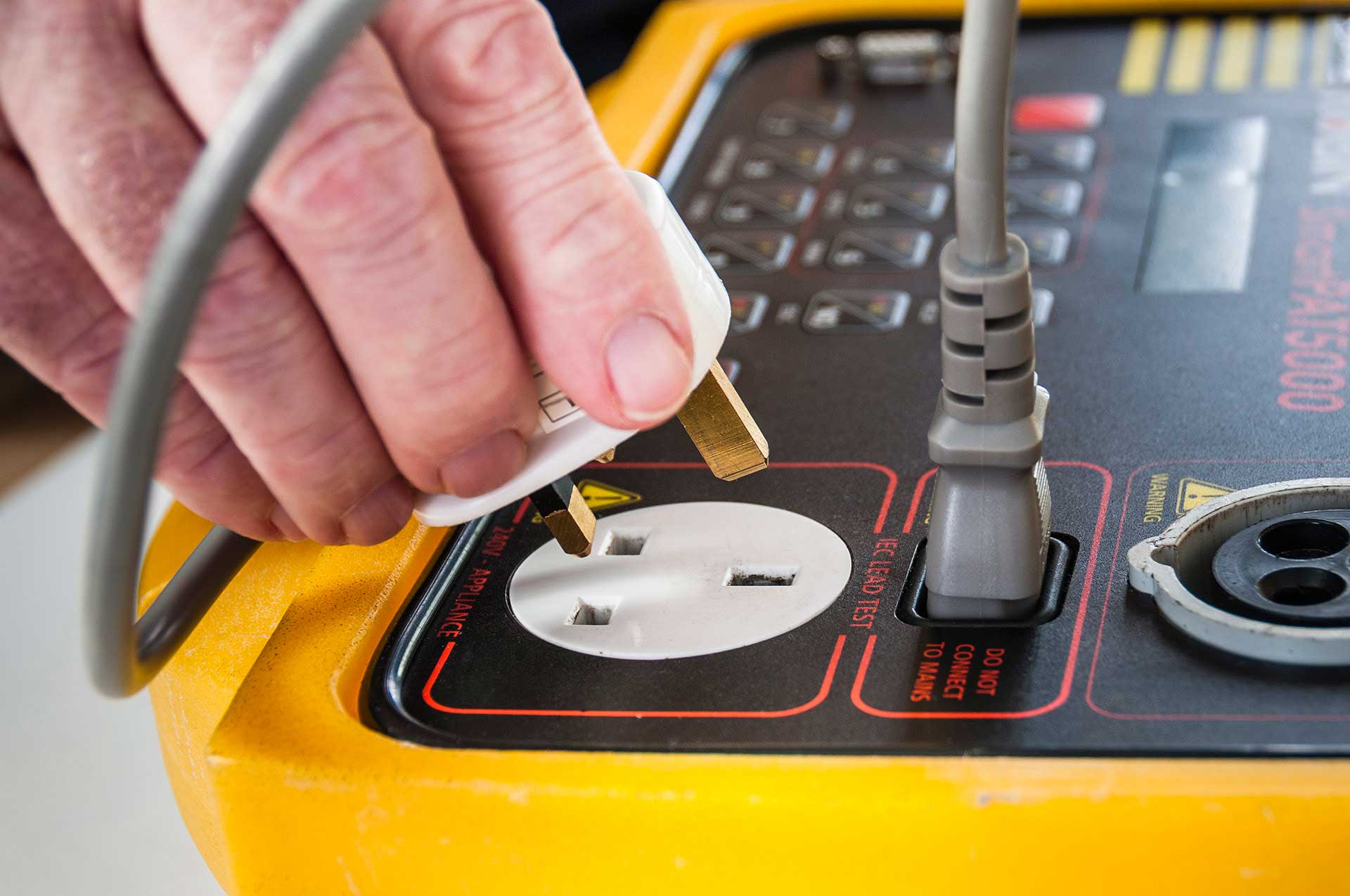
Once the visual inspection is complete, it’s time for the manual examination. This is the stage of the Electrical PAT Testing where the portable appliance tester device is introduced. This device will test the appliance for earth continuity, lead polarity and insulation resistance.

Depending on the results, the appliance will receive a pass or fail sticker. Failed appliances should not be used, and should be removed for disposal or repair. Once repaired, it must pass an additional PAT test to be considered safe for use. 

Who can carry out a PAT test? 

Electrical PAT testing can be carried out by any competent person with the relevant training and equipment. This will likely be a qualified electrician. Interested in learning how to perform PAT testing and other electrical procedures? You might want to consider completing an electrical course.Get in touch with The Skills Centre to learn more about becoming an electrical engineer, or read more about our courses on our website!
Post Info :
Share this :

Other posts you may like

Plumbing Course Checklist: 10 Questions to Ask Before You Enrol

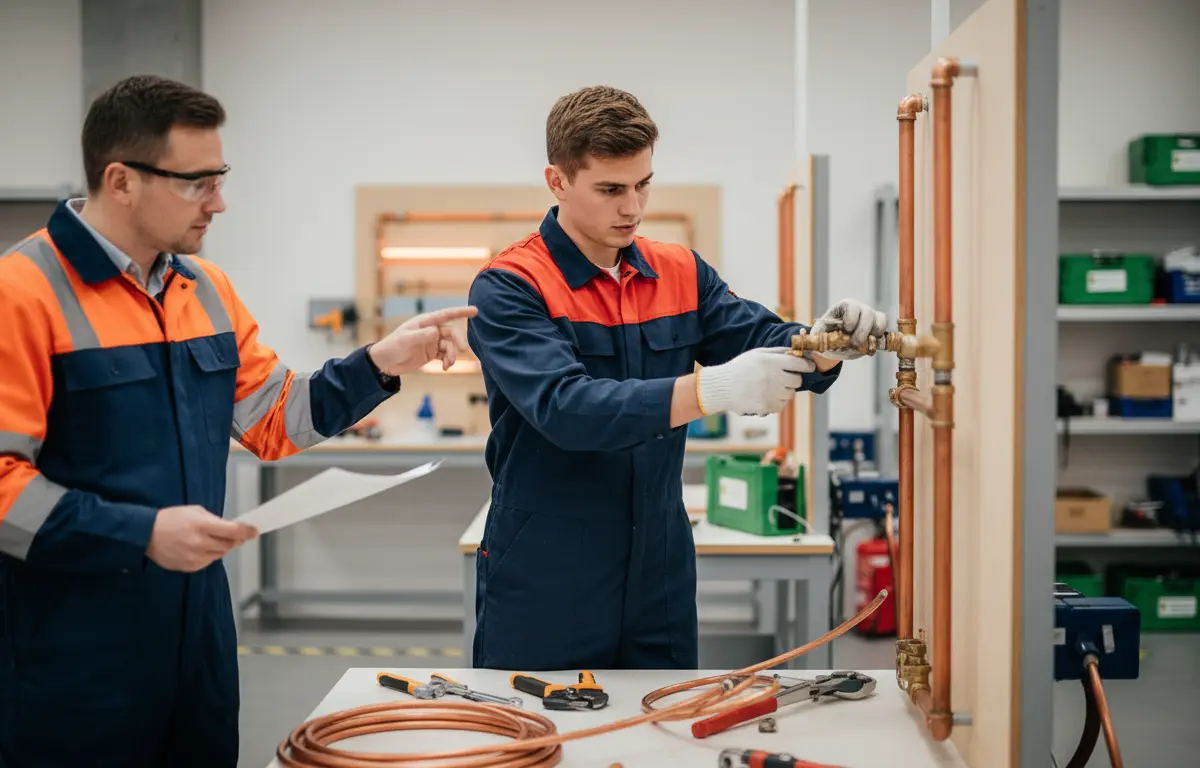
Plumbing trainee working on pipework in a workshop with a tutor

Choosing a plumbing course is a big decision. It takes time and effort, and it sets the direction for your new career. Course pages can look very similar, so the real differences only show up when you ask the right questions.

This checklist gives you 10 of them. Use it with any training provider in the UK, including us, and keep notes so you can compare the answers side by side.

Why the right questions matter before you enrol

Two courses can both be called a plumbing course and still lead to very different places. One might give you plenty of hands-on practice and a qualification employers recognise. Another might be mostly theory with little time spent working on real pipework.

Asking questions up front helps you spot that difference. It also shows you how a provider communicates. If answers are clear and specific, that is a good sign. If they are vague, ask again.

Which qualification will you actually leave with?

This is the first thing to pin down, because everything else depends on it.

1. What is the qualification called, and who awards it?

Ask for the full title of the qualification and the name of the awarding organisation. You should be able to look it up independently. Be wary of certificates that only carry the training provider's own name and cannot be checked elsewhere.

2. What level is it, and is it right for where you are now?

Plumbing qualifications in the UK are set at different levels. Some are designed for complete beginners, while others build on existing knowledge or on-the-job experience. Ask where this course sits and whether it is meant for someone starting from scratch. Our plumbing course guide explains the training options in more detail.

3. Does it cover gas work?

A plumbing qualification does not, on its own, allow you to work on gas appliances. Gas work needs separate training and Gas Safe registration. If you want to work with both water and gas, ask whether the provider offers a combined route. Our article on the gas plumbing course explains how dual qualification training works.

How much time is spent in the workshop compared with the classroom?

Plumbing is a practical trade. You learn it by doing it, so the balance between theory and practice matters a great deal.

4. How is the time split?

Ask for a rough breakdown of workshop hours and classroom hours. Theory is important, since you need to understand regulations, safety and how systems work. But you also need enough time with pipes, fittings and tools to build real confidence.

5. How many learners share a tutor and a workstation?

A busy workshop can mean less time on the tools for each person. Ask how many learners are in a group, whether you will have your own bay or workstation, and how much one-to-one guidance you can expect. If you can visit and see the workshop first, even better.

What tools, materials and equipment are provided?

Practical costs are easy to overlook until you are already on the course.

6. What is provided during training?

Find out whether tools, materials and safety equipment are supplied in the workshop, and whether the equipment is similar to what you would use on site. Training on modern, realistic setups helps you move into work more smoothly.

7. What do you need to buy yourself, and what is included in the price?

Ask for a clear list of anything you would need to buy, such as work boots, workwear or your own hand tools. Also check whether assessment fees, registration fees, learning materials and any resits are covered or charged separately. A good provider will happily give you the full picture so there are no surprises later. Comparing the total, not just the headline figure, is the fairest way to judge value.

How is your work assessed?

8. What does assessment involve?

Plumbing assessment usually combines practical tasks with written or online questions. Some qualifications, such as NVQs, are based on showing your competence in real or realistic work situations. Ask:

  • Which parts are practical and which are written?
  • Are assessments spread through the course or all at the end?
  • What happens if you do not pass first time?
  • Who carries out the assessment, and are they experienced in the trade?

The answers tell you how well the course prepares you for the standard you will be held to at work.

What support is there for finding work afterwards?

9. What happens once you have qualified?

Getting qualified is one step. Finding your first job or building a client base is the next. Ask what help is available, for example guidance on CVs, advice on routes into employment, or information on becoming self-employed. Be realistic too. No provider can promise you a job, so be cautious of anyone who does. What you want is honest, practical support.

If you are weighing up a different route, our guide to choosing between an apprenticeship or a course covers the main differences. If you are changing careers later in life, adult plumbing courses may also be useful.

Next steps: how to compare providers and get in touch

10. How long will it take, and does the timetable fit your life?

The final question is a practical one. Ask how long the course runs, how many days a week you would attend, and whether there are options for evenings, weekends or full-time study. If you are balancing work or family, this can decide whether a course is realistic. Our article on how long a plumbing course takes explains what affects the timescale.

Putting your answers side by side

Once you have spoken to a few providers, write the 10 questions down the side of a page and fill in each provider's answers. Look for:

  • A qualification you can verify
  • A good share of hands-on workshop time
  • Clear information on what is and is not included
  • Fair, well-explained assessment
  • Honest support for what comes next

If you are still building a shortlist, our guide to finding plumbing courses near you shows how to compare training options across the UK.

Talk to us

We are happy to answer all 10 of these questions about our plumbing and gas training. Get in touch with Skills Centre UK, tell us where you are starting from and what you want to achieve, and we will help you work out which route suits you.

Frequently asked questions

What should I look for in a plumbing course?

Look for a qualification from a named awarding organisation that you can verify, plenty of hands-on workshop time, clear information on what is included in the price, fair assessment and honest support for finding work afterwards.

Does a plumbing course let me work on gas?

No. A plumbing qualification does not on its own cover gas work. To work on gas appliances you need separate gas training and Gas Safe registration. Some providers offer combined plumbing and gas routes.

How is a plumbing course assessed?

Most plumbing courses combine practical assessments, where you carry out tasks to a set standard, with written or online questions. Some qualifications, such as NVQs, focus on showing your competence in work situations.

Do I need experience before starting a plumbing course?

Not always. Many courses are designed for beginners, while others suit people who already have some experience. Ask the provider which level the course starts at and whether it matches your background.

Should I choose a plumbing course or an apprenticeship?

It depends on your circumstances. A course can suit people who want to train in a set period, while an apprenticeship combines work and learning. Compare both routes before deciding which fits your situation.