Did you know that you don’t have to be a qualified electrician in order to carry out PAT testing?
As long as you’re competent to do so, absolutely anyone can check electrical appliances for safety. The most commonly accepted way to be seen as competent is to take a PAT training course and be presented with a Certificate of Competency in PAT testing.
What is PAT Testing?
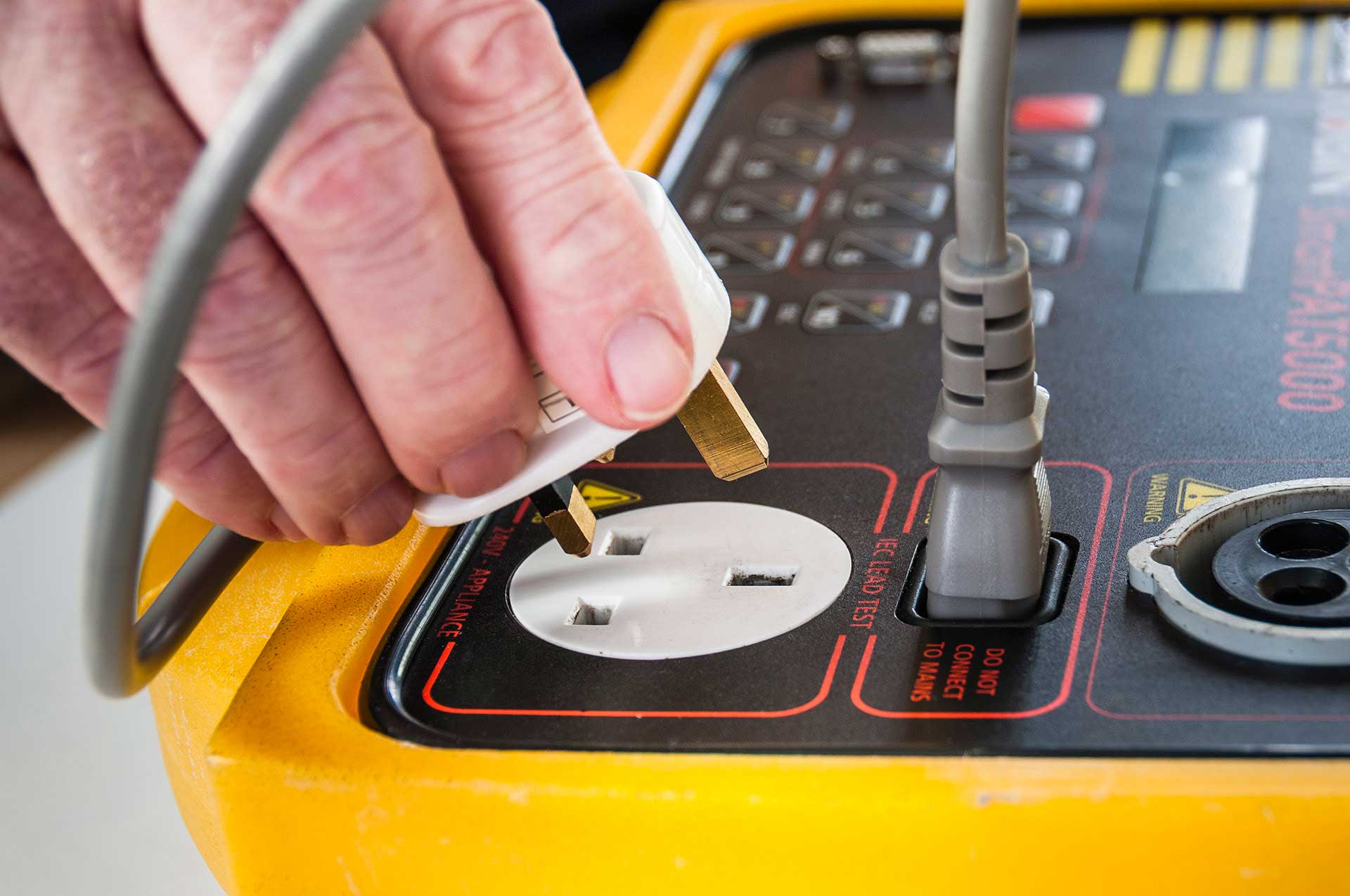
Portable Appliance Testing, also known as PAT testing, is the examination of portable electrical equipment and appliances to ensure they are safe to use. It generally includes three steps;
Regular, informal checks by the electrical equipment’s user(s)
A formal visual inspection of the equipment
A manual examination of the equipment with a portable appliance tester device (the PAT test)
Any portable electrical appliance (anything with a lead and a plug) needs to be PAT tested. Some examples include laptops and computers, kettles, handheld drills, printers, microwaves etc.
Is PAT testing a legal requirement?
PAT testing is not a legal requirement. The law does state that any electrical equipment in the workplace must be maintained to ensure it is safe and doesn’t pose any risk to the people using it. It doesn’t, however, specify how the equipment should be maintained, or how often.
Generally, PAT testing involves three steps, user checks, a visual inspection and the manual PAT test using a portable appliance tester.
User checks
All users should be trained on how to use the equipment safely. This includes understanding the risks associated with the equipment and how to look out for signs of danger. Every individual should be able to visually check the appliance for any signs of damage and understand whether or not it is safe for use. They should also be able to highlight potential hazards such as trapped cables or water hazards.
Visual inspection
A formal visual inspection should be carried out by a competent member of staff or a professional (an electrical engineer). The HSE says that this process normally flags up 90% of issues with electrical equipment. The equipment should be switched off and unplugged before carrying out this stage of the inspection.
Check the plug for any signs of damage. This includes cracks, burns, or bent pins. When checking the wiring, you should ensure that the live, neutral and earth wires are all tightly connected.
Check the cable for any signs of damage. This could be cuts or fraying. Any exposed wiring is a fail.
Check the appliance itself for damages. This includes cracks, burns, corrosion or other signs of wear and tear.
Check the mains socket for damages. This doesn’t relate to the appliance itself, but it’s worth checking for cracks, signs of overheating and any loose fittings on the plug socket.
Residual current device (RCD) checks. The RCD’s test button will trip if the current flowing through the live conductor is different to that in the neutral.
Manual Examination
Once the visual inspection is complete, it’s time for the manual examination. This is the stage of the Electrical PAT Testing where the portable appliance tester device is introduced. This device will test the appliance for earth continuity, lead polarity and insulation resistance.
Depending on the results, the appliance will receive a pass or fail sticker. Failed appliances should not be used, and should be removed for disposal or repair. Once repaired, it must pass an additional PAT test to be considered safe for use.
Who can carry out a PAT test?
Electrical PAT testing can be carried out by any competent person with the relevant training and equipment. This will likely be a qualified electrician. Interested in learning how to perform PAT testing and other electrical procedures? You might want to consider completing an electrical course.Get in touch with The Skills Centre to learn more about becoming an electrical engineer, or read more about our courses on our website!
Plumber or Gas Engineer: Do You Need Both Skill Sets?
If you are thinking about a career in the heating and plumbing trades, you will soon hit a common question: do you train as a plumber, a gas engineer, or both? The answer depends on the work you want to do day to day. This guide explains where the two trades differ, where they overlap, and when a gas plumbing course that covers both sets of skills is worth considering.
How plumbing and gas work differ
The two trades share tools and techniques, but they deal with different systems and different risks.
Plumbing covers water. That means hot and cold supplies, waste and drainage, bathrooms, kitchens, cylinders, radiators and the pipework that links them together. Plumbers fit, repair and maintain these systems and diagnose problems such as leaks, low pressure and blockages.
Gas engineering covers gas supply and gas appliances. That includes boilers, hobs, ovens, gas fires and the pipework, flues and ventilation that go with them. Gas engineers install, service, test and repair appliances, and check that they are safe to use.
The biggest difference is regulation. In Great Britain, anyone working on gas appliances or gas pipework must be on the Gas Safe Register. Northern Ireland has its own arrangements, so check the rules where you plan to work. Plumbing does not carry the same legal registration requirement, although the work still has to meet Water Regulations and Building Regulations.
That is why gas training is built around safety: testing for leaks, checking combustion, and knowing when an appliance must be disconnected.
Where the two trades overlap
Much of a home heating system is a mix of water and gas, and that is where the trades meet.
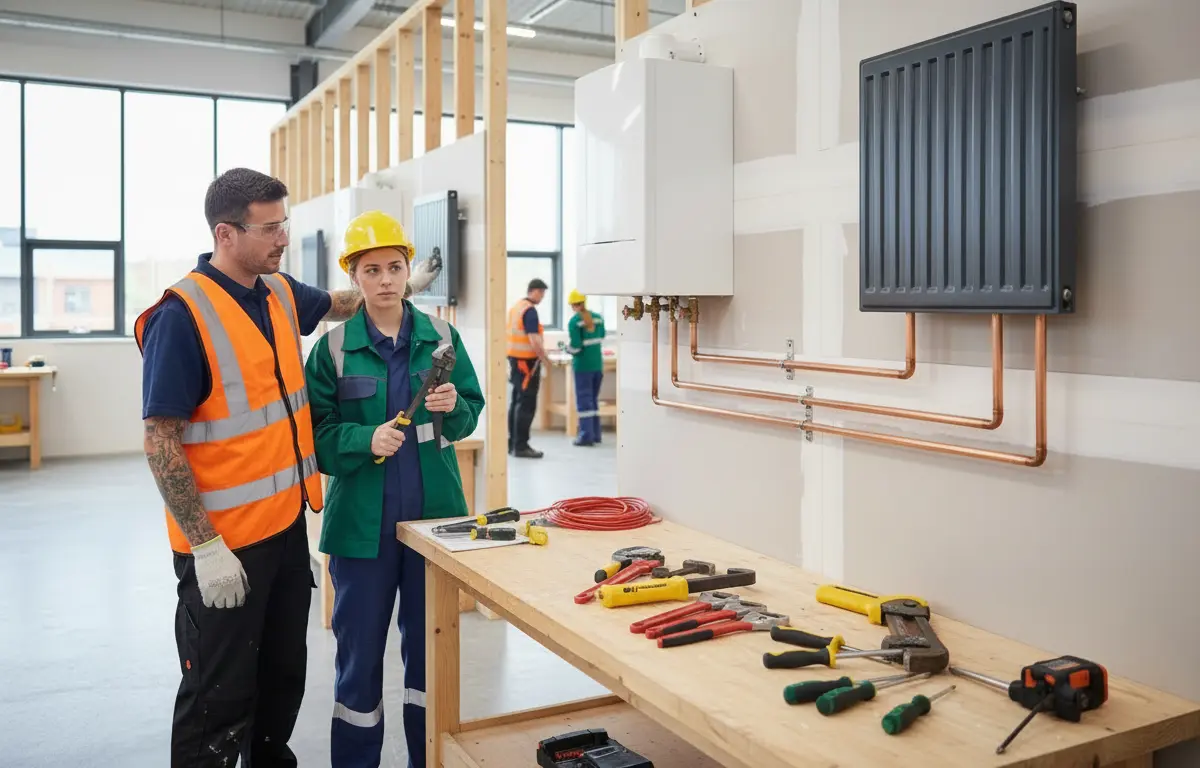
A gas boiler heats water that travels through pipes to radiators and taps. The gas supply to the boiler is gas work. The heating pipework, radiators, valves, pumps and hot water cylinder are plumbing. On many jobs the two are physically side by side.
The skills overlap too:
Cutting, bending and joining pipework neatly and securely
Reading plans and manufacturer instructions
Pressure testing and fault finding
Working in customers' homes, often in tight spaces
Some work is much easier to do end to end if you hold both skill sets:
Boiler replacements. Removing the old unit, altering pipework, fitting the new boiler, connecting gas, flushing the system and commissioning it.
Full central heating installations. Radiators, pipe runs, controls and the boiler all in one job.
Bathroom or kitchen refits with gas appliances. A new kitchen with a gas hob, for example, involves both water and gas connections.
Landlord and letting agent work. Gas safety checks often turn up a repair that involves water or heating pipework as well as the appliance.
Repairs and call-outs. A cold radiator or a pressure drop might be a plumbing fault, a boiler fault, or both.
If you only hold one set of skills, you can still do plenty of work, but you may have to bring in another tradesperson to finish part of the job. That can mean more coordination, more waiting and less control over the finished result.
Pros of training in both
There are good reasons to combine the two, and a couple of things to weigh up.
The advantages
Broader range of work. You can take on whole heating and hot water jobs rather than part of them.
Less subcontracting. Fewer hand-offs can mean smoother jobs and happier customers.
More options as an employee. Heating and plumbing firms often value people who can do more than one thing.
Flexibility if you go self-employed. A wider service list gives you more ways to find work.
Better fault finding. Understanding both the water side and the gas side helps you spot the real cause of a problem faster.
Things to consider
It takes more training time overall than one trade alone.
Gas work comes with ongoing responsibility, including keeping your registration and knowledge up to date.
If you only want to do bathrooms and general plumbing, you may not need gas at all.
Be honest with yourself about the type of work you enjoy. Some people love the problem solving in boilers and heating. Others prefer the practical, visible results of fitting bathrooms. Neither is wrong.
How to sequence your training
There is no single correct order, but a few patterns work well.
Plumbing first, then gas. This is a common route. Gas training builds on a solid understanding of pipework and heating systems, so starting with plumbing gives you a firm base. It also lets you start earning in the trade before adding gas. If you are starting from scratch, How Long Does a Plumbing Course Take to Complete can help you plan your time.
Gas first, if heating is your goal. If you already have some pipework experience, or you are set on boilers and heating, you can go straight into gas training. Gas Engineer Training: From Beginner to Professional shows how that path builds step by step.
Apprenticeship route. If you would rather learn while working for an employer, a plumbing apprenticeship or a gas engineer apprenticeship lets you build skills on the job. Gas Engineer Apprenticeship vs Course: Which Route to Choose explains the differences between learning on the job and learning in a training centre.
What kind of work do you want to be doing in five years? Heating and boilers point towards both skill sets. General plumbing and bathrooms may only need the plumbing side.
Do you want to be employed or self-employed? Employers often recruit for specific roles, while self-employed tradespeople tend to benefit from a wider range of services.
How do you like to learn? Some people prefer classroom and workshop training. Others do better earning while learning through an apprenticeship.
What time can you commit? Training in both takes longer than one, but you can stage it.
You do not have to decide everything today. Many people start with one trade and add the other as their confidence and career goals become clearer. At Skills Centre UK we offer plumbing courses, gas engineer courses, and apprenticeships in both plumbing and gas, for learners across the UK. Get in touch and tell us what you want to do, and we can talk through the route that suits you best.
Frequently asked questions
Do I need to be a plumber to become a gas engineer?
No, you do not have to qualify as a plumber first. However, gas work involves a lot of pipework and heating knowledge, so many people find it easier to start with plumbing skills or experience before moving into gas.
Can a plumber fit a boiler?
A plumber can connect the water and heating pipework, but the gas connection and commissioning must be done by someone on the Gas Safe Register in Great Britain. Many people train in both so they can complete the whole job themselves.
Is it worth training in both plumbing and gas?
It can be, especially if you want to work on boilers and central heating. Holding both skill sets lets you handle more of each job and reduces the need to bring in other trades. If you only want to focus on bathrooms or general plumbing, you may not need gas.
Which should I learn first, plumbing or gas?
Many learners start with plumbing because gas training builds on pipework and heating knowledge. If you are set on boilers and heating, or already have relevant experience, you can go straight into gas training.
Can I learn plumbing and gas through an apprenticeship?
Yes. Both plumbing and gas engineer apprenticeships are available, and they let you learn on the job while working for an employer. The best route depends on how you like to learn and the work you want to do.