Did you know that you don’t have to be a qualified electrician in order to carry out PAT testing?
As long as you’re competent to do so, absolutely anyone can check electrical appliances for safety. The most commonly accepted way to be seen as competent is to take a PAT training course and be presented with a Certificate of Competency in PAT testing.
What is PAT Testing?
Portable Appliance Testing, also known as PAT testing, is the examination of portable electrical equipment and appliances to ensure they are safe to use. It generally includes three steps;
Regular, informal checks by the electrical equipment’s user(s)
A formal visual inspection of the equipment
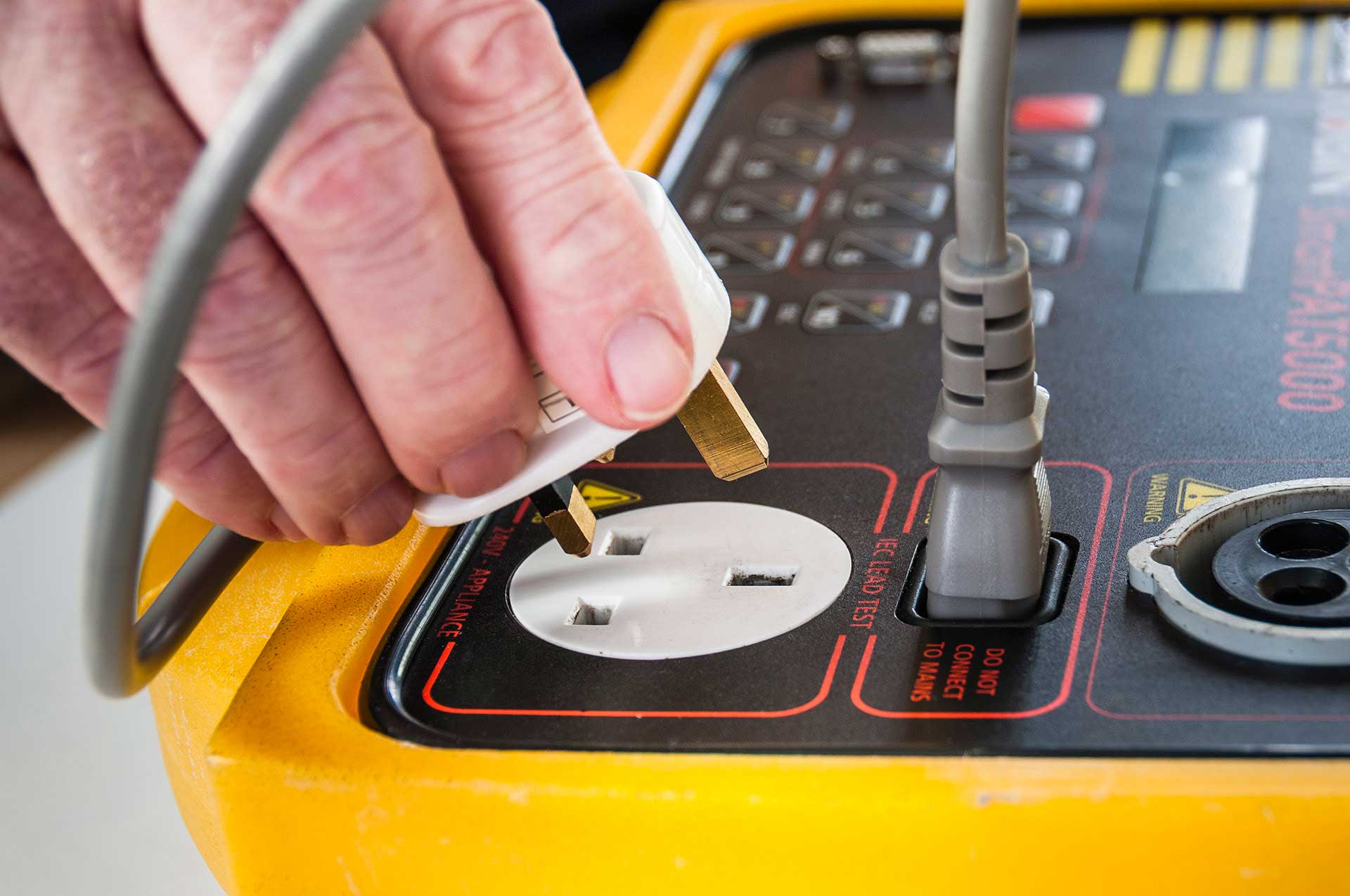
A manual examination of the equipment with a portable appliance tester device (the PAT test)
Any portable electrical appliance (anything with a lead and a plug) needs to be PAT tested. Some examples include laptops and computers, kettles, handheld drills, printers, microwaves etc.
Is PAT testing a legal requirement?
PAT testing is not a legal requirement. The law does state that any electrical equipment in the workplace must be maintained to ensure it is safe and doesn’t pose any risk to the people using it. It doesn’t, however, specify how the equipment should be maintained, or how often.
Generally, PAT testing involves three steps, user checks, a visual inspection and the manual PAT test using a portable appliance tester.
User checks
All users should be trained on how to use the equipment safely. This includes understanding the risks associated with the equipment and how to look out for signs of danger. Every individual should be able to visually check the appliance for any signs of damage and understand whether or not it is safe for use. They should also be able to highlight potential hazards such as trapped cables or water hazards.
Visual inspection
A formal visual inspection should be carried out by a competent member of staff or a professional (an electrical engineer). The HSE says that this process normally flags up 90% of issues with electrical equipment. The equipment should be switched off and unplugged before carrying out this stage of the inspection.
Check the plug for any signs of damage. This includes cracks, burns, or bent pins. When checking the wiring, you should ensure that the live, neutral and earth wires are all tightly connected.
Check the cable for any signs of damage. This could be cuts or fraying. Any exposed wiring is a fail.
Check the appliance itself for damages. This includes cracks, burns, corrosion or other signs of wear and tear.
Check the mains socket for damages. This doesn’t relate to the appliance itself, but it’s worth checking for cracks, signs of overheating and any loose fittings on the plug socket.
Residual current device (RCD) checks. The RCD’s test button will trip if the current flowing through the live conductor is different to that in the neutral.
Manual Examination
Once the visual inspection is complete, it’s time for the manual examination. This is the stage of the Electrical PAT Testing where the portable appliance tester device is introduced. This device will test the appliance for earth continuity, lead polarity and insulation resistance.
Depending on the results, the appliance will receive a pass or fail sticker. Failed appliances should not be used, and should be removed for disposal or repair. Once repaired, it must pass an additional PAT test to be considered safe for use.
Who can carry out a PAT test?
Electrical PAT testing can be carried out by any competent person with the relevant training and equipment. This will likely be a qualified electrician. Interested in learning how to perform PAT testing and other electrical procedures? You might want to consider completing an electrical course.Get in touch with The Skills Centre to learn more about becoming an electrical engineer, or read more about our courses on our website!
Paying for Plumbing and Gas Training: Funding Routes Worth Checking
If you are weighing up a gas engineer course or a plumbing qualification, the course content is only half the question. The other half is how you will pay for it, and whether you can keep your household running while you train. The good news is that there is more than one route, and a little planning early on makes the decision far easier.
This guide covers the main ways UK learners fund trade training, what to ask a provider, and how to judge whether a qualification is right for your goals. It is general guidance, so always confirm the details for your own situation with the provider and the relevant official body.
Why it helps to plan funding early
Funding rules and options can depend on your age, your employment status, where in the UK you live and what you have studied before. Finding that out after you have set your heart on a start date can be frustrating.
A few weeks of research before you book lets you:
Compare routes properly, such as a course, an apprenticeship or a mix of both.
Work out whether you can reduce your working hours or need to keep earning while you train.
Avoid missing application windows for any support you might be eligible for.
Choose a start date that suits your finances as well as your diary.
It also helps to be clear on what the total cost of training includes. Beyond tuition, think about travel, tools, work clothing, assessment fees and any time off work.
Self-funding and payment plans
Many people pay for training themselves, using savings, redundancy money or income from their current job. This route gives you the most freedom over when and where you train, and you do not need an employer to sponsor you.
If paying in one go is not realistic, ask the provider whether spreading the cost is possible and what the terms would be. Some training providers offer instalment arrangements and others do not, so it is worth asking directly rather than assuming. If you are considering any form of credit, read the terms carefully, check the total amount you would repay and only borrow what you are confident you can manage.
When you speak to us or any other provider, ask for a clear written breakdown of what the course fee covers. That makes it much easier to budget accurately.
Employer support and apprenticeships
If you already work for a business in the building, maintenance or heating sector, your employer might be willing to support your training. Some employers contribute towards fees, give time off for study or sponsor a particular qualification because it fills a gap in their team. It costs nothing to ask, and it helps to explain how the qualification would benefit the business.
Apprenticeships
An apprenticeship is a different model altogether. You are employed, you learn on the job and you also train towards a recognised qualification. Because you are working, you earn a wage while you learn, and the training is arranged between you, your employer and the training provider.
The trade-off is that you first need an employer willing to take you on, and the apprenticeship usually runs over a longer period than a full-time course. If you are weighing the two, our guide to gas engineer apprenticeship vs course sets out the differences. If the apprenticeship route appeals, our article on the gas engineer apprenticeship as a route to a skilled trade career goes into more detail, and the same principles apply to a plumbing apprenticeship.
Apprenticeship rules, including who can start one and how it is funded, are set separately in England, Scotland, Wales and Northern Ireland. Check the current position for the nation where you live.
Government or local funding schemes
Support for adult learners and career changers exists in various forms across the UK, but it changes over time and depends on where you live. Some schemes are aimed at particular age groups, people who are unemployed or on certain benefits, or people who want to retrain in an area with skills shortages.
A sensible approach is to:
Look at the official government website for your nation to see which adult learning and skills support is currently available.
Contact your local council or combined authority, as some run their own skills programmes.
Speak to a Jobcentre Plus work coach if you are claiming benefits and want to retrain. Ask what is allowed alongside your claim.
Ask your chosen training provider whether any of the courses they offer are eligible for external funding.
Do not assume that because a friend received support, you will too. Eligibility is personal, and the only reliable answer is the one you get from the scheme administrator.
What to ask a training provider about funding
A good provider will be happy to talk through the money side before you commit. Questions worth asking include:
What exactly is included in the course fee, and what is not?
Are there any extra costs for assessments, materials, tools or certification?
Can the fee be paid in stages, and if so, on what terms?
Is the course eligible for any government or local funding?
What happens if I need to pause or withdraw part way through?
The aim is to treat training as an investment in a skilled trade. The right question is not only what it costs, but whether it gets you to the work you want and whether you can plan for it realistically.
Ready to talk it through?
If you are considering a gas engineer course, plumbing course or apprenticeship, the Skills Centre UK team can talk you through the options and help you understand what each route involves. Get in touch to discuss your goals, ask about funding and find a route that fits your circumstances.
FAQ
How can I pay for a gas engineer course?
Most learners use one or more of these routes: paying themselves from savings or income, asking an employer for support, taking an apprenticeship so they earn while they train, or checking whether any government or local funding applies. Ask your provider which options they can help with.
Can I get funding for a plumbing course in the UK?
Sometimes. Support depends on your age, where you live, your employment status and the course itself. Check the official government website for your nation and ask the training provider whether the course is eligible.
Is an apprenticeship a way to avoid paying for training?
An apprenticeship combines paid work with training, so you earn while you learn. The training is arranged through your employer and a training provider, and the rules differ across England, Scotland, Wales and Northern Ireland. You will need an employer willing to take you on.
What should I ask a training provider before booking?
Ask what the fee includes, whether there are extra costs for assessments or materials, whether payment can be spread, whether external funding is possible, and what happens if you need to pause your training.
Frequently asked questions
How can I pay for a gas engineer course?
Most learners use one or more of these routes: paying themselves from savings or income, asking an employer for support, taking an apprenticeship so they earn while they train, or checking whether any government or local funding applies. Ask your provider which options they can help with.
Can I get funding for a plumbing course in the UK?
Sometimes. Support depends on your age, where you live, your employment status and the course itself. Check the official government website for your nation and ask the training provider whether the course is eligible.
Is an apprenticeship a way to avoid paying for training?
An apprenticeship combines paid work with training, so you earn while you learn. The training is arranged through your employer and a training provider, and the rules differ across England, Scotland, Wales and Northern Ireland. You will need an employer willing to take you on.
What should I ask a training provider before booking?
Ask what the fee includes, whether there are extra costs for assessments or materials, whether payment can be spread, whether external funding is possible, and what happens if you need to pause your training.