
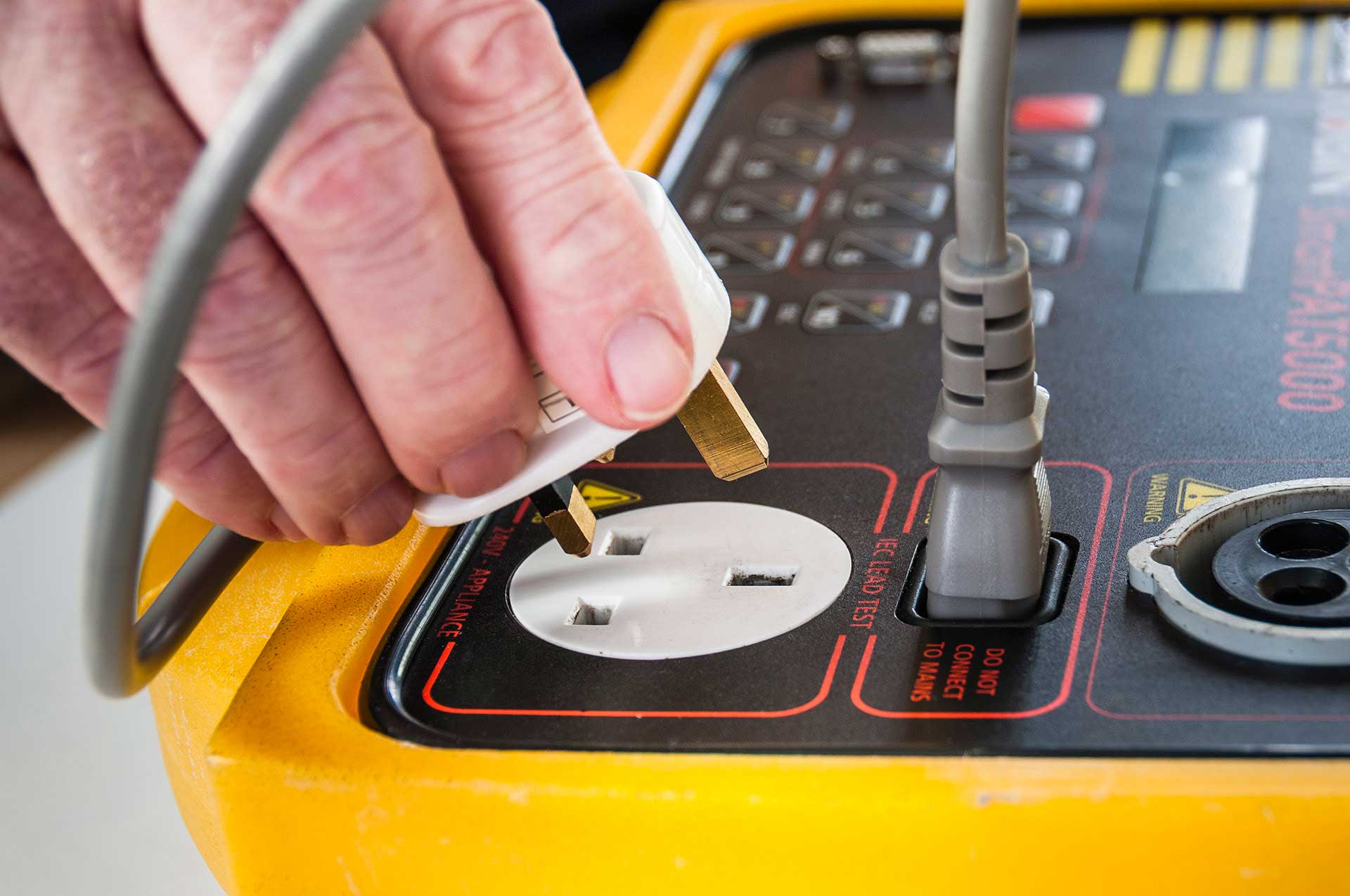
Our guide to PAT Testing

Pat testing new

Did you know that you don’t have to be a qualified electrician in order to carry out PAT testing?

As long as you’re competent to do so, absolutely anyone can check electrical appliances for safety. The most commonly accepted way to be seen as competent is to take a PAT training course and be presented with a Certificate of Competency in PAT testing.

What is PAT Testing? 

Portable Appliance Testing, also known as PAT testing, is the examination of portable electrical equipment and appliances to ensure they are safe to use. It generally includes three steps; 

  1. Regular, informal checks by the electrical equipment’s user(s) 
  2. A formal visual inspection of the equipment 
  3. A manual examination of the equipment with a portable appliance tester device (the PAT test)

Any portable electrical appliance (anything with a lead and a plug) needs to be PAT tested. Some examples include laptops and computers, kettles, handheld drills, printers, microwaves etc.

Is PAT testing a legal requirement? 

PAT testing is not a legal requirement. The law does state that any electrical equipment in the workplace must be maintained to ensure it is safe and doesn’t pose any risk to the people using it. It doesn’t, however, specify how the equipment should be maintained, or how often. 

PAT testing is recommended by professionals as the best way to meet these health and safety obligations and to protect yourself and your employees. 

What does electrical PAT testing involve?

Generally, PAT testing involves three steps, user checks, a visual inspection and the manual PAT test using a portable appliance tester. 

User checks

All users should be trained on how to use the equipment safely. This includes understanding the risks associated with the equipment and how to look out for signs of danger. Every individual should be able to visually check the appliance for any signs of damage and understand whether or not it is safe for use. They should also be able to highlight potential hazards such as trapped cables or water hazards. 

Visual inspection 

A formal visual inspection should be carried out by a competent member of staff or a professional (an electrical engineer). The HSE says that this process normally flags up 90% of issues with electrical equipment. The equipment should be switched off and unplugged before carrying out this stage of the inspection. 

  • Check the plug for any signs of damage. This includes cracks, burns, or bent pins. When checking the wiring, you should ensure that the live, neutral and earth wires are all tightly connected. 
  • Check the cable for any signs of damage. This could be cuts or fraying. Any exposed wiring is a fail.
  • Check the appliance itself for damages. This includes cracks, burns, corrosion or other signs of wear and tear.
  • Check the mains socket for damages. This doesn’t relate to the appliance itself, but it’s worth checking for cracks, signs of overheating and any loose fittings on the plug socket. 
  • Residual current device (RCD) checks. The RCD’s test button will trip if the current flowing through the live conductor is different to that in the neutral. 

Manual Examination 

Once the visual inspection is complete, it’s time for the manual examination. This is the stage of the Electrical PAT Testing where the portable appliance tester device is introduced. This device will test the appliance for earth continuity, lead polarity and insulation resistance.

Depending on the results, the appliance will receive a pass or fail sticker. Failed appliances should not be used, and should be removed for disposal or repair. Once repaired, it must pass an additional PAT test to be considered safe for use. 

Who can carry out a PAT test? 

Electrical PAT testing can be carried out by any competent person with the relevant training and equipment. This will likely be a qualified electrician. Interested in learning how to perform PAT testing and other electrical procedures? You might want to consider completing an electrical course.Get in touch with The Skills Centre to learn more about becoming an electrical engineer, or read more about our courses on our website!
Post Info :
Share this :

Other posts you may like

How to Join the Gas Safe Register: From Training to Registration

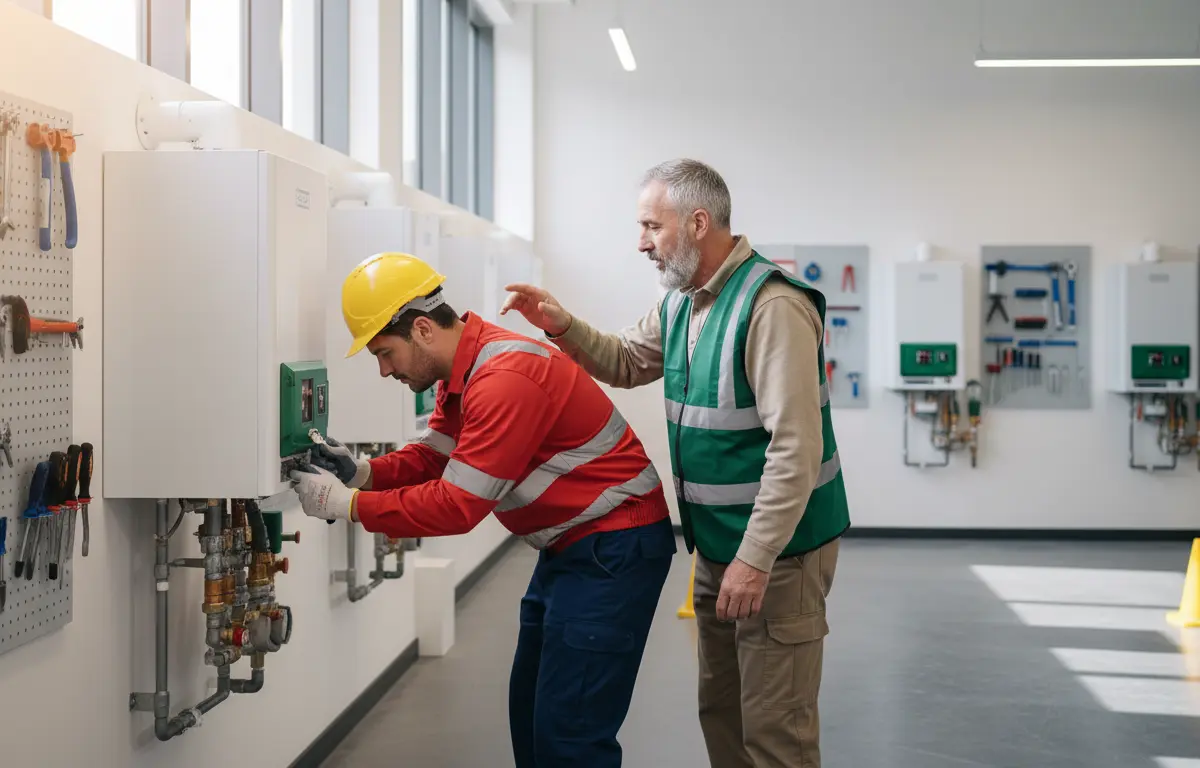
Trainee gas engineer working on a boiler with a tutor in a training workshop

Finishing a gas course is a big step, but it is not the last one. Many learners are unsure what happens between passing their assessments and being able to work legally on gas appliances. This guide walks through that route in plain terms, so you know what to expect before you book a gas safe register course.

What the Gas Safe Register is and why it matters

The Gas Safe Register is the official list of gas engineers who are legally allowed to work on gas appliances and installations in Great Britain, the Isle of Man and Guernsey. Northern Ireland has its own arrangements, so if you plan to work there, check the local requirements before you choose your training.

For customers, the register is how they check that someone is qualified to work safely in their home. For you, it is the proof that you have met the standard and can work on gas as a professional.

Why you must be registered to work legally on gas appliances

Gas work is regulated because mistakes can cause gas leaks, fires, explosions and carbon monoxide poisoning. In Great Britain, anyone who carries out gas work as a job must be on the Gas Safe Register. Working without registration is illegal, and it puts people at risk.

This is why a course certificate alone does not let you start taking on gas jobs. Your training gives you the skills and the qualifications. Registration is what gives you the legal right to use them.

It also helps to know that registration is tied to the type of work you are competent in. Your registration shows which areas of gas work you are qualified for, such as certain appliance types or domestic and commercial settings. You can only work within those areas.

Training and assessment you complete first

Before you can apply to register, you need to show that you are competent. In practice, that means completing structured gas training and then passing the assessments that prove your skills.

A typical route looks like this:

  • Learning the theory. Gas safety, regulations, how appliances work, ventilation, flues and how to identify and respond to unsafe situations.
  • Practical training. Hands-on work in a training environment, so you build real confidence working on gas systems.
  • Assessment. You are assessed on both knowledge and practical skill. For gas work, this includes the industry's accredited competence assessments for the areas you want to work in.
  • Building experience. Some learners go on to gain more on-the-job experience, which is one reason people weigh up a course against an apprenticeship. Our article on Gas Engineer Apprenticeship vs Course explains the differences.

If you are starting from scratch, Gas Engineer Training: From Beginner to Professional gives a wider picture of how the stages fit together. If you already have plumbing experience, Gas Plumbing Course: Dual Qualification Training may be the more relevant read.

Applying for registration

Once you hold the right qualifications, you can apply to join the register. The exact steps and requirements are set by the Gas Safe Register, so always check its current guidance before you apply. In general, the process involves:

  1. Gathering your evidence. This includes your valid competence certificates for the types of gas work you are qualified to do.
  2. Deciding how you will work. Registration is linked to a business. If you are self-employed, you register your own business. If you work for an employer, they need to be registered and you will be associated with their registration.
  3. Submitting your application. You apply through the Gas Safe Register and pay the registration fee that applies at the time.
  4. Receiving your ID card. Once registered, you are issued with a Gas Safe ID card. It lists the types of gas work you are qualified to carry out, and customers can use it to check you.

It is worth having your paperwork organised before you start, as that keeps the process simple.

Keeping your registration and qualifications current

Registration is not a one-off. To stay on the register you need to:

  • Renew your registration on a regular basis, as the Gas Safe Register requires.
  • Keep your competence assessments up to date. Gas qualifications need to be reassessed periodically, so you will need to book reassessment before they expire.
  • Keep learning. Regulations, appliances and safety guidance change over time, and staying informed is part of working safely.
  • Work only within your qualified areas. If you want to take on new types of gas work, you will need to complete the relevant training and assessment first, then have your registration updated.

A useful habit is to diarise your renewal and reassessment dates as soon as you qualify, so nothing lapses.

Where Skills Centre UK training fits in

Skills Centre UK offers training for people across the UK who want to move into the gas and plumbing trades. That includes a gas engineer course, a gas engineer apprenticeship, a plumbing course and a plumbing apprenticeship.

Training is the first part of the route described above. It is where you build the knowledge and practical skills you need, and prepare for the assessments that come before registration. Which option suits you depends on your situation:

Whichever route you take, ask us what is included in your chosen programme and what you will need to do next to apply for registration. We are happy to talk it through so there are no surprises after you finish.

Ready to take the next step?

The path from training to the Gas Safe Register is clear once you can see all the stages. If you would like help choosing the right gas engineer course or apprenticeship, get in touch with Skills Centre UK and we will explain your options.

Frequently asked questions

Do I need to be on the Gas Safe Register to work on gas?

Yes. In Great Britain, anyone who does gas work as a job must be on the Gas Safe Register. Working on gas without registration is illegal.

Does completing a gas course automatically register me?

No. A course gives you the training and prepares you for assessment. After you hold the required qualifications, you apply to the Gas Safe Register separately.

What do I need before I can apply to the Gas Safe Register?

You need valid competence qualifications for the type of gas work you plan to do, and a way of working that fits registration, such as your own registered business or an employer who is registered.

Do I have to renew my Gas Safe registration?

Yes. You must renew your registration regularly and keep your competence assessments up to date so they do not expire.

Frequently asked questions

Do I need to be on the Gas Safe Register to work on gas?

Yes. In Great Britain, anyone who does gas work as a job must be on the Gas Safe Register. Working on gas without registration is illegal.

Does completing a gas course automatically register me?

No. A course gives you the training and prepares you for assessment. Once you hold the required qualifications, you apply to the Gas Safe Register separately.

What do I need before I can apply to the Gas Safe Register?

You need valid competence qualifications for the type of gas work you plan to do, and a way of working that fits registration, such as your own registered business or a registered employer.

Do I have to renew my Gas Safe registration?

Yes. You must renew your registration regularly and keep your competence assessments up to date so they do not expire.