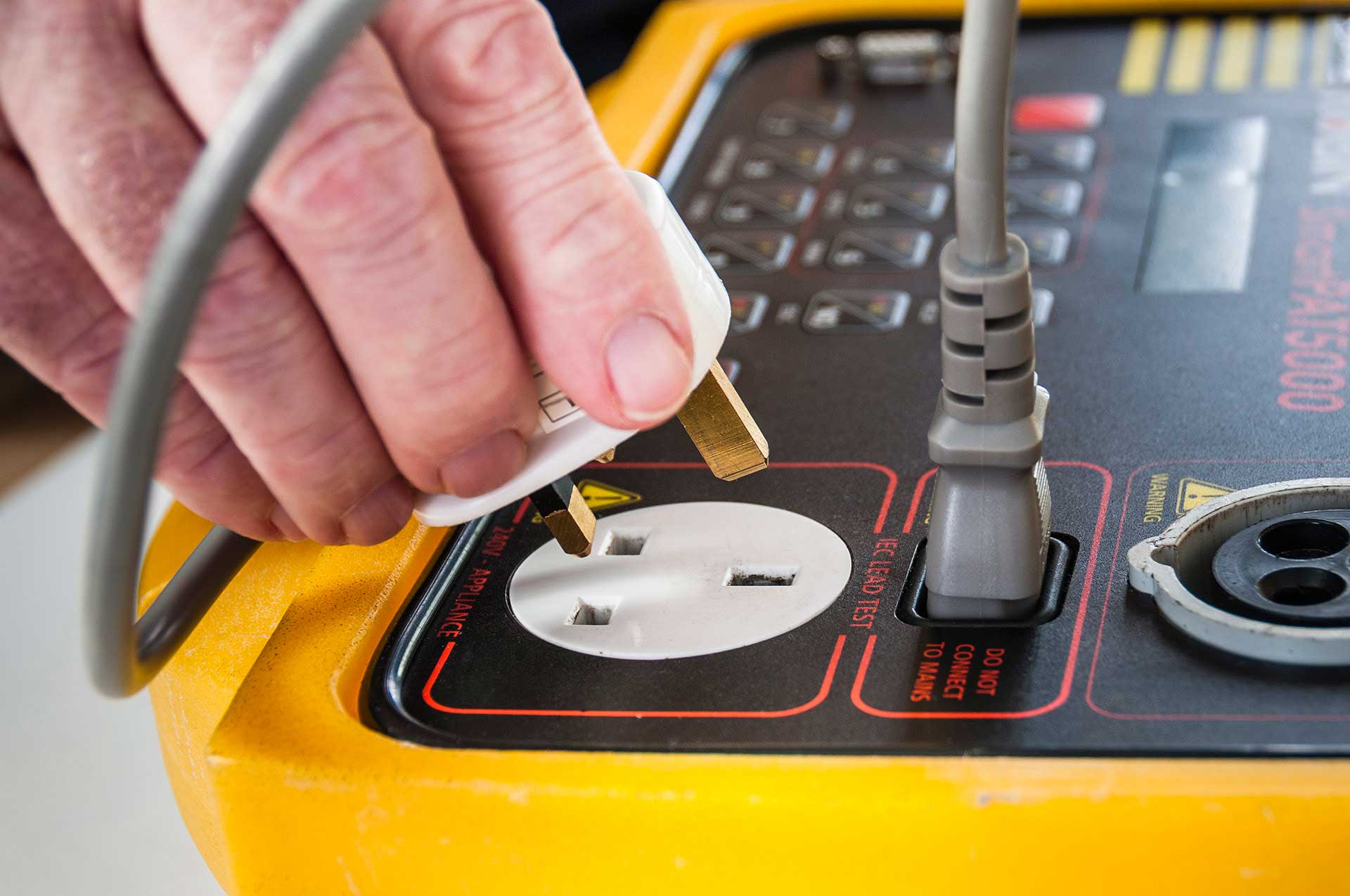
Did you know that you don’t have to be a qualified electrician in order to carry out PAT testing?
As long as you’re competent to do so, absolutely anyone can check electrical appliances for safety. The most commonly accepted way to be seen as competent is to take a PAT training course and be presented with a Certificate of Competency in PAT testing.
What is PAT Testing?
Portable Appliance Testing, also known as PAT testing, is the examination of portable electrical equipment and appliances to ensure they are safe to use. It generally includes three steps;
Regular, informal checks by the electrical equipment’s user(s)
A formal visual inspection of the equipment
A manual examination of the equipment with a portable appliance tester device (the PAT test)
Any portable electrical appliance (anything with a lead and a plug) needs to be PAT tested. Some examples include laptops and computers, kettles, handheld drills, printers, microwaves etc.
Is PAT testing a legal requirement?
PAT testing is not a legal requirement. The law does state that any electrical equipment in the workplace must be maintained to ensure it is safe and doesn’t pose any risk to the people using it. It doesn’t, however, specify how the equipment should be maintained, or how often.
Generally, PAT testing involves three steps, user checks, a visual inspection and the manual PAT test using a portable appliance tester.
User checks
All users should be trained on how to use the equipment safely. This includes understanding the risks associated with the equipment and how to look out for signs of danger. Every individual should be able to visually check the appliance for any signs of damage and understand whether or not it is safe for use. They should also be able to highlight potential hazards such as trapped cables or water hazards.
Visual inspection
A formal visual inspection should be carried out by a competent member of staff or a professional (an electrical engineer). The HSE says that this process normally flags up 90% of issues with electrical equipment. The equipment should be switched off and unplugged before carrying out this stage of the inspection.
Check the plug for any signs of damage. This includes cracks, burns, or bent pins. When checking the wiring, you should ensure that the live, neutral and earth wires are all tightly connected.
Check the cable for any signs of damage. This could be cuts or fraying. Any exposed wiring is a fail.
Check the appliance itself for damages. This includes cracks, burns, corrosion or other signs of wear and tear.
Check the mains socket for damages. This doesn’t relate to the appliance itself, but it’s worth checking for cracks, signs of overheating and any loose fittings on the plug socket.
Residual current device (RCD) checks. The RCD’s test button will trip if the current flowing through the live conductor is different to that in the neutral.
Manual Examination
Once the visual inspection is complete, it’s time for the manual examination. This is the stage of the Electrical PAT Testing where the portable appliance tester device is introduced. This device will test the appliance for earth continuity, lead polarity and insulation resistance.
Depending on the results, the appliance will receive a pass or fail sticker. Failed appliances should not be used, and should be removed for disposal or repair. Once repaired, it must pass an additional PAT test to be considered safe for use.
Who can carry out a PAT test?
Electrical PAT testing can be carried out by any competent person with the relevant training and equipment. This will likely be a qualified electrician. Interested in learning how to perform PAT testing and other electrical procedures? You might want to consider completing an electrical course.Get in touch with The Skills Centre to learn more about becoming an electrical engineer, or read more about our courses on our website!
Gas Engineer Training Explained: Safety Standards and ACS Assessments
If you are thinking about gas engineer training, you will soon come across the letters ACS. They crop up in course descriptions, job adverts and forum threads, often with little explanation. This guide sets out what ACS means, why it matters and how your training fits around it, so you know what to expect before you enrol.
Why gas work is tightly regulated
Gas is safe when installed, serviced and repaired properly. When it is not, the risks are serious: gas leaks, fires, explosions and carbon monoxide poisoning. Because the person who works on an appliance is often the only professional to see it for months or years, the law expects them to be properly trained and assessed.
In Great Britain, anyone who carries out gas work on a customer's property must be on the Gas Safe Register. Northern Ireland and some other parts of the UK have their own arrangements, so if you plan to work outside Great Britain, check the local rules before you choose a pathway.
The practical result is simple. You cannot learn gas work informally on the job and start charging customers. You need recognised training and a formal assessment of your competence.
What ACS assessments are
ACS stands for Accredited Certification Scheme. It is the way gas operatives show they are competent to work safely on gas appliances and installations. Think of it as a practical and theory check, carried out by an approved assessment centre, that confirms you can do the work to the required standard.
A few points are worth knowing:
It is an assessment, not just a classroom course. You are observed carrying out real tasks on working gas equipment.
It is divided into areas. You are assessed on core gas safety knowledge first, then on the specific types of appliance you want to work on.
It supports your Gas Safe registration. Your ACS results show the areas of gas work you are qualified to carry out.
You may see codes such as CCN1 (core domestic gas safety) and others for particular appliances, such as boilers, cookers and fires. Each code relates to a set of skills you have to demonstrate.
Common areas covered
The exact content depends on the modules you take, but the same safety themes appear again and again. Here are the ones beginners should get comfortable with.
Safe isolation and emergency procedures
Before you touch an appliance, you need to know how to make it safe. That means knowing where and how to isolate the gas supply, how to deal with a suspected leak, and what to do if you find an unsafe situation. Assessors pay close attention to this because it protects you and the customer.
Gas tightness testing
You will learn to check that an installation does not leak, using the correct equipment and method, and to interpret the result. It is a core skill, and one you will repeat throughout your career.
Ventilation and flue checks
Appliances need air to burn gas safely, and the products of combustion must leave the property safely. You will learn to check that ventilation is adequate and that flues are correctly installed and working. These checks are central to preventing carbon monoxide problems.
Appliance checks and operation
For each appliance type, you will need to show you can check that it is working correctly, that the burner pressure and gas rate are right, and that safety devices operate as they should. You will also be expected to spot defects and decide whether an appliance can stay in use.
Reporting and customer communication
Finding a fault is only half the job. You need to explain the problem clearly, record what you found and advise the customer on next steps. Good communication is part of working safely.
How training prepares you for assessment
A good gas engineer course is built around the assessment. You learn the theory, then practise the hands-on tasks until they feel routine, so that on assessment day you are repeating skills you have already used many times.
Here is what that usually looks like in practice:
Theory first. You build your understanding of gas properties, regulations, combustion, ventilation and safety procedures.
Supervised practical work. You work on training rigs and appliances with an instructor watching, correcting your technique and building good habits.
Repetition and feedback. Tasks such as safe isolation and tightness testing are practised repeatedly, because assessors look for a methodical, safe approach.
Assessment. You demonstrate your competence to an assessor and answer questions on what you are doing and why.
If you do not pass an area first time, that is not the end of the road. Feedback shows you what to work on, and you can usually be reassessed after more practice. If you are unsure how this works for a particular course, ask the training provider before you enrol.
Your background matters too. If you already have plumbing experience, some of the pipework and workshop skills will feel familiar, though gas safety has its own rules and habits. If you are completely new to the trades, a structured route with plenty of practice time will help. Our guide to Gas Plumbing Course: Dual Qualification Training explains how plumbing and gas skills can be combined.
How often competence needs to be reassessed
Gas competence is not a one-off event. Your skills and knowledge are expected to stay current, so you will need to be reassessed periodically, and regulations and standards can change over time.
The exact reassessment arrangements are set by the certification and registration bodies, and they can be updated. Before you start, check the current requirements with your assessment centre or the Gas Safe Register, and ask your training provider how they support ongoing competence after you qualify.
Planning your training pathway
There is more than one route into gas work, and the right one depends on your circumstances.
A full-time or part-time course suits people who want to concentrate on learning and move into work once qualified. It is a common choice for career changers.
An apprenticeship suits people who want to earn while they learn, working with an employer alongside their training.
Plumbing first, gas second suits people who want a broad skill set and more flexibility in the work they can take on.
Whichever route you choose, ask a few practical questions before enrolling:
Does the training prepare you for the ACS assessments you need?
How much hands-on practice time will you get?
What happens if you need to retake part of an assessment?
How does the course fit around your work and family commitments?
Ready to take the next step?
Understanding ACS takes the mystery out of gas engineer training. It is a structured way of proving you can work safely, and the right training builds your skills step by step. If you would like to talk through your options, get in touch with Skills Centre UK. We can explain our gas engineer courses and apprenticeships, and help you choose the pathway that suits you.
Frequently asked questions
What does ACS mean in gas engineering?
ACS stands for Accredited Certification Scheme. It is the assessment route through which gas operatives demonstrate that they are competent to work safely on gas appliances and installations.
Do I need ACS assessments to work as a gas engineer?
In Great Britain, you must be on the Gas Safe Register to carry out gas work, and ACS assessments are how you show your competence for the areas of work you want to cover. Arrangements can differ elsewhere in the UK, so check local rules.
What do ACS assessments cover?
They cover core gas safety, such as safe isolation, gas tightness testing, ventilation and flue checks, and appliance checks. You are then assessed on the specific appliance types you want to work on.
Can I retake an ACS assessment if I do not pass?
Usually, yes. You receive feedback on the areas to improve, practise them and then be reassessed. Ask your training provider and assessment centre how retakes work.
How often do gas engineers need to be reassessed?
Competence has to be kept up to date through periodic reassessment. The exact arrangements are set by the certification and registration bodies, so check the current rules with your assessment centre or the Gas Safe Register.